A Piece of History
1. The Mahdist Uprising in Sudan
In 1881, Egypt was ruled by Ottoman Turkey. Because of the construction of the Suez Canal, Egypt incurred massive debts it could not sustain and sold its canal shares to Britain; thus began Britain’s actual control over Egypt. At that time, Sudan was ruled by Egypt. Under the greedy taxation and cruel governance of Egyptian officials, Sudan had long been a powder keg. A dervish named Muhammad Ahmad declared he was the Mahdi—the savior sent by Allah. He told the desperate nomads, farmers, and slaves that by following him, they could not only cast off the shackles of the infidels but also cleanse the sins of their souls.
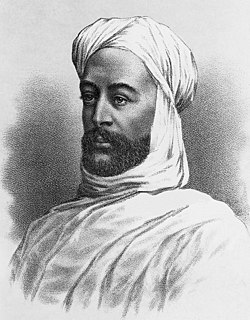
The Governor-General in Cairo initially regarded this as merely a small-scale disturbance. They sent two companies of soldiers to arrest this “mad monk," but the two units ended up slaughtering each other in the dark due to a lack of command. The Mahdi’s followers, wielding simple wooden sticks and spears, rushed into the camp and put the survivors to the sword. This accidental victory was seen as a miracle, and the wildfire of rebellion instantly swept across all of Sudan.
2. Ten Thousand Egyptian Soldiers Annihilated
By 1883, the situation had become uncontrollable. A British officer named Hicks was ordered to lead over ten thousand Egyptian soldiers—who were demoralized by high levels of corruption and severely undertrained—into Sudan to suppress the rebellion.
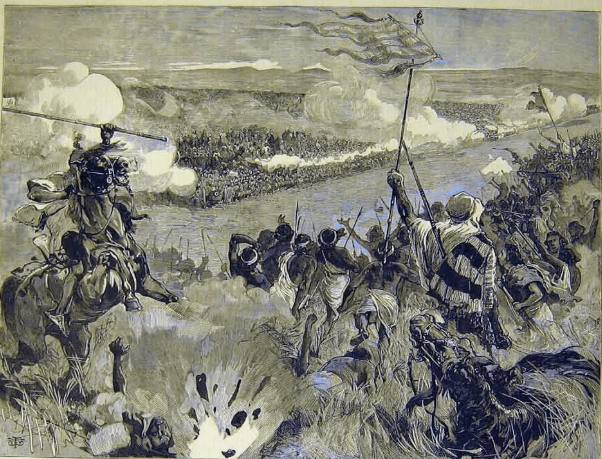
The result was total annihilation; Hicks fell in battle. The Mahdi captured thousands of advanced Remington rifles and several Krupp cannons. He was no longer a rebel leader; he became the master of Sudan.
3. The Fall of the Sudanese Capital and the Killing of Governor Gordon
The Gladstone government in London were troubled. They did not want to invest a single penny into this desolate desert, but they could not sit idly by while thousands of British and Egyptian officials and expatriates were trapped in Sudan. Thus, they thought of one man: Charles George Gordon.
Anyone familiar with the history of the Taiping Rebellion will surely remember Gordon. He was the leader of the famous “Ever Victorious Army" that helped Li Hongzhang’s Huai Army defend Shanghai and capture Suzhou. Because of his military achievements in China and his success in collaborating with foreigners, Gordon earned the nickname “Chinese Gordon" and was deeply loved by the British, with fans including Queen Victoria. He was handsome, brave, fanatical, and stubborn.
When he arrived in Khartoum, the citizens cheered on the banks as if he alone were an army. In persuit of even greater glory, after the British and Egyptian expatriates were evacuated, he decided to stay and live or die with the city.
In March 1884, the Mahdi’s army completed encirclement of Khartoum. Gordon stood on the roof of the Governor-General’s palace, peering north through a telescope every day, hoping for the sight of reinforcements. He wrote in his diary that he was fighting a religious frenzy he could not understand. Food in the city ran out; people began eating rats and palm bark. At dawn on January 26, 1885, the city’s defenses collapsed. The Mahdi’s warriors poured into the streets like a tide. Gordon put on his governer’s uniform, grasped his sword, and stood calmly at the top of the official residence’s stairs. When a spear pierced his chest, he did not even let out a whimper. His head was severed and hung on a tree, facing Mecca.
British reinforcements arrived sluggishly on the outskirts of the dead city two days later; seeing the city had fallen, they were forced to retreat.
The Mahdi died of illness shortly after the fall of Khartoum. His successor, Abdallahi, took power and established a theocratic Caliphate in Sudan. Sudan entered a decade-long dark age, where famine, civil war, and harsh Sharia law ruled the land.
4. Grenfell Restructures the Egyptian Army
But meanwhile, in Cairo to the north, a key figure who would change the situation was working silently. He was Francis Grenfell, then the Commander-in-Chief of the Egyptian Army.
Grenfell knew well that the early failures were not because the soldiers were not brave, but because the entire Egyptian military system was rotten. He began a patient restructuring. He dismissed all the officials who had bought their way into office and were bloated with self-importance, replacing them with energetic young British officers like Kitchener. He established a rigorous recruitment system and provided soldiers with ample rations, clean uniforms, and timely pay—something unimaginable in Egypt before.
Most importantly, Grenfell reshaped the Egyptian soul. He introduced British tactical training, emphasizing collective fire and psychological resilience. He wanted to plant the seeds of discipline and honor in this group of originally timid conscripts. He told his subordinates:
“We are not recruiting soldiers; we are creating a new nation.”
5. The Egyptian New Army’s First Trial by Fire
Like the modern Islamic State, Sudan’s Caliph Abdallahi intended to conquer the world for Islam. In 1889, believing the time was ripe to conquer Egypt, he sent his most esteemed and fanatical general, Njumi, to lead five thousand elite warriors and thousands of camp followers in an attempt to drive straight down the West Bank of the Nile to Cairo.
However, Njumi did not know what he was about to face. At Toski, Grenfell personally led this transformed Egyptian New Army, standing ready.
The Sudanese warriors shouted “Allahu Akbar," waving broad swords as they charged the Anglo-Egyptian positions. They expected the Egyptian soldiers to collapse as they had countless times in the past. However, the New Army displayed terrifying discipline—they stood as firm as a mountain, unleashing steady volleys of fire that cut down wave after wave of attackers on the sand. The vast majority of the Sudanese, including Njumi, were annihilated.
The Battle of Toski completely shattered the Mahdist regime’s dreams of outward expansion and proved to the world the combat effectiveness of the new army reshaped by Grenfell. This was the moment the scales of war began to tilt. News of the victory sent mainland Britain into a frenzy of celebration.
Because of his merit in reconstructing Egypt, Francis Grenfell was granted a barony, the Grand Cross of the Order of the Bath, appointed as a Privy Councilor, Field Marshal of the British Army, and Governor of Malta.
6. The Final Battle
Twelve years after Gordon was killed, in 1896, Britain launched its final campaign of vengeance. Replacing Grenfell was his hand-picked protégé, Kitchener—a cold, efficient man who was extremely sensitive to numbers. Kitchener understood that winning this war required not just courage, but also engineering.
He refused to let his soldiers trudge through the desert and repeat Hicks’ tragedy. He ordered the construction of a “military railway" across the desert. Under extreme heat, workers laid tracks mile after mile; the railway transported not only soldiers but a continuous stream of heavy artillery, Maxim guns, and ice.
At the same time, Kitchener assembled a fleet of inland armed vessels. These black steamboats patrolled the Nile, their giant funnels spewing black smoke. When the Caliph’s warriors tried to build fortifications on the banks, the heavy guns on the steamboats would easily blow them to pieces. Kitchener was like a precise machine, devouring the Mahdi’s territory bit by bit. Every fortress’s fall was the result of precise calculation.
September 2, 1898, was the day of Britain’s final vengeance against the crazed Islamic Sudan.
Caliph Abdallahi gathered fifty thousand warriors. In the dawn, countless battle flags fluttered in the wind; the Mahdist army was like a white sea of clouds, shouting religious slogans as they launched their final charge against the Anglo-Egyptian forces. They believed the miracle of Allah would make the bullets swerve in front of them.
On the other side, Kitchener stood at the headquarters, expressionless. He led twenty-six thousand troops, of which only eight thousand were British; the rest were Egyptians and Sudanese soldiers who opposed the Caliph. When the tide of the Caliph’s charge reached five hundred yards, the gates of hell opened. Twenty Maxim guns emitted a terrifying sound, like tearing silk, and dozens of cannons fired simultaneously.
The young Winston Churchill witnessed this as a cavalryman. He later described it not as a battle, but as an execution. No one could survive such fire power. Fifty thousand warriors fell like wheat being harvested. By the end of the battle, not a single Sudanese warrior reached within fifty meters of the British line.
Within half a day, the Mahdist state perished. Caliph Abdallahi fled in the chaos, only to be killed a year later. Kitchener entered Khartoum and held a solemn requiem in front of the ruins where Gordon had been killed. Onlookers were surprised to find the usually resolute and steady Kitchener weeping.
What does this story tell us?
During this 14-year Sudanese Mahdist War, Britain spent very little; the main financial resources and manpower came from Egypt. They significantly curtailed corruption, and Egypt’s fiscal revenue skyrocketed, making it fully capable of sustaining Grenfell’s new army. Through these 14 years of war, Britain gained complete control over Egypt and Sudan, greatly expanding its influence in Africa while bringing civilization, stability, and prosperity to the region; the living standards of the common people improved significantly. If you have seen the Oscar-winning movie Out Of Africa, you would know that although colonial Africa was not a paradise on earth, it was more than paradise compared to some of the Africa of today. Over a hundred years later, today’s Egypt was the first to end its hostility with Israel; it has never become a hotbed or exporter of terrorists, and has never erupted into civil war or other large-scale turmoil. Britain’s 110 years of potent intervention in Egypt deserve a great deal of credit.
Despite gaining such massive benefits, Britain itself sacrificed almost nothing. In the 14 years of war, only 750 British soliders died in total.
I don’t know how you feel seeing this, but when I see this part of British history, I find it unbelievable.
This is simply impossible!!!
Why impossible?
The total investment made by the United States in Afghanistan over 20 years in terms of military, infrastructure, and livelihood, when converted to 2025 dollars, is $6.5 trillion. In the same year, the two largest U.S. expenditures—healthcare and defense—total $2.5 trillion. The U.S. expenditure in Afghanistan is 2.6 times that! However, this staggering sum, along with five thousand American deaths and twenty thousand wounded, all went down the drain. When something goes down the drain, it makes a sound; after the U.S. withdrew, the Afghan government forces disappeared within a week without even making a sound.
In the Mahdi war, the British faced Islamic followers far more fanatical than those the Americans faced in Afghanistan. In a fierce battle, when Mahdist warriors broke into the British square and both sides engaged in a desperate struggle, a priest actually knelt down in the middle of the fray and started to read aloud the Quran!
The British and the Mahdist army used rifles and artillery of the same generation; the gap in military capability was far smaller than the gap between the U.S. military and the Taliban.
Why then could Britain bring huge benefits to itself and the region, while the United States suffered bone-breakingly massive losses without even making a splash?
Because colonial Britain carried out potent intervention in Egypt; the middle and upper-level cadres of the government and army were all held by British. Because of their sense of honor and Christian spirit, the majority of these British were loyal to their duties and did not engage in the massive corruption like the previous Ottoman Turkish officials.
In comparision, in Afghanistan, the politically correct Americans only gave money, letting the Afghans decide how to use it themselves. As a result, 99% of the money went into the pockets of Afgan officials at all levels; they became a hundred times more corrupt than before.
Further earlier, the United States did exactly the same thing in Vietnam, with exactly the same result.
Even earlier, the United States did something different – potent intervention as the British did in Egypt. The Japanese nation’s “law of the jungle" way of thinking before the war was a tradition of over a thousand years, ingrained in their gene. Yet, after just twenty years of potent intervention under the bayonets of the U.S. occupation, Japan became the most gentle and kind nation in the world. Today’s democratic and prosperous Japan has become the bridgehead for the democratic camp against the Asian bullies of China and Russia; its strategic value in the world today cannot be overestimated.
The conclusion is starkly clear.
A nation’s wisdom has nothing to do with the race’s genes or brain capacity, nor even its level of education—unless the educational process forcefully instills correct thinking methods. Back when I was a senior database consultant, a colleague of mine from Pakistan, who held the same position and was loved by clients for his competence, believed that 9/11 was planned by the U.S. government itself and that Bin Laden was not dead. The father of my son’s classmate, an Iranian man who held two doctorates from the University of Melbourne, believed that the failure of the U.S. special forces’ rescue of Iranian embassy hostages on April 24, 1980,was because Russia launched a “black tech" missile from ten thousand miles away. A Chinese friend, a leading academic in the University of Melbourne asked me during the national referendum on whether Indigenous Australians should have a voice in parliament:
“What if the Indigenous people tell us all to jump into the sea? So we can’t give them the right to speak!”
A nation’s intelligence comes from the collective beliefs and logical reasoning paths formed over hundreds or even thousands of years. The beliefs and logic of Westerners are closest to the truth because they contain the least fear; the more savage and backward a nation is, the more fear, absurdity, and stupidity its beliefs and logic contain. A person who grows up immersed in this logic from childhood can win international math competitions, can become a PhD or even a leading academic at Melbourne University, but his thinking methods still will not escape the ignorance of his nation.
Therefore, a wise nation cannot give a foolish nation a huge pile of money and then pull out pre-Trump era political correctness:
“We respect you as a completely equal nation, we will not be condescending and tell you what to do, we trust you will make decisions as good as ours.”
The result will be Afghanistan.
If they were truly a nation as wise as Westerners, their homeland would not have been a shithole today; they would not have needed the West’s money.
Therefore, unless the West decides to let those backward regions fend for themselves, if the West decides to take action, it must abandon pre-Trump era political correctness and have the courage to say, “They are just ignorant” and “We must force them to learn our way of thinking.”
The West must readopt the potent interventionism of the colonial era.
I fiercely attacked Trump for not supporting Machado because she “stole" his Nobel Peace Prize, turning instead to support the Maduro regime. However, the United States forcibly seizing all of Venezuela’s oil, selling it itself, and then bypassing the layers of curruption in the Venezuelan government to directly use the income on Venezuela—this approach may be the potent intervention I advocate.
Trump is not entirely a rogue or a fool; he put a period on the Western political correctness of the pre-Trump era. This may be one of his greatest contributions to the world.

 做个明白人
做个明白人 
Many years ago, an American said he thought the Chinese were all striving for democracy. I thought to myself, have you even bothered to understand what China is like now? Everyone is busy making money, going abroad, and immigrating. The real estate market was booming back then. Westerners were essentially brainwashing themselves. The values of the post-World War II era were a product of a specific time. By 2000, they were basically outdated. Everything the West did was wishful thinking. It wasn’t China defeating the West; it was common sense defeating incurable liberalism. They can oppose things in the real world, but if they bury their heads in the sand, refuse to understand others, or think they are always right, then they are simply foolish. They criticize China, but China didn’t deliberately deceive them. If they didn’t like it, what did they do? What did they do that benefited themselves? In fact, they accelerated their own decline because of their stubbornness, arrogance, and self-righteousness. If an “America First” policy had emerged twenty years ago, perhaps the liberal order wouldn’t have collapsed. Ironically, the West criticizes China, yet now they are all flocking to China, only to receive a lukewarm reception. It’s truly ironic.
讚讚